To the non-gamer, hearing the word “monk” brings to mind a very particular image. Old, bald guy, perhaps with a walrus moustache, dressed in an orange toga sitting cross-legged on the floor humming to himself. To be fair, I have been gaming since leaving the womb and I still can’t suppress an internal “Ohmmmmmmm” when i hear it.
Blessed/cursed as I am with extraordinarily vivid imagination, shaking this mental picture requires some effort, however once conquering that mental wall, it’s fairly easy to see why the monk has become one of the most beloved archetypes in modern fantasy and a staple of the genre, and most importantly, this author’s favorite. In fact I’m currently running a monk in a Dungeons and Dragons campaign at the moment.
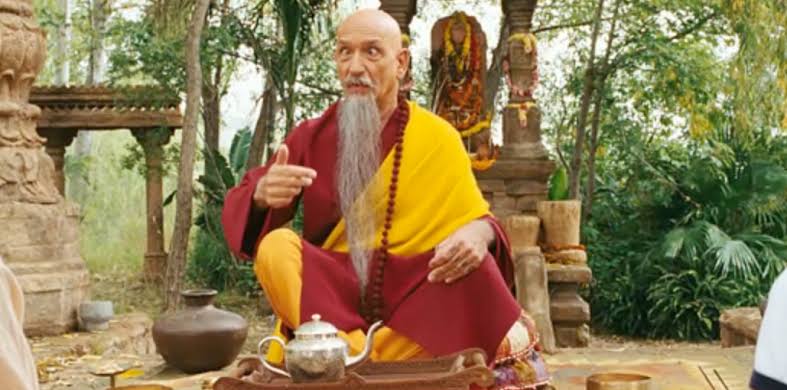
Before we can go further, we need to first establish exactly what a monk is. Well, Wikipedia defines a monk as a person who has dedicated their lives to a higher purpose, either alone or in a cloistered community. Usually these individuals spend their days in contemplation, prayer and searching for the meaning of life and all that other monastic good stuff. Over time the monk seemed to lose some of the religious undertones in favor of a more secular, but no less righteous undertaking. Usually it had something to do with mastering ones inner power, emotionally, mentally and, of course, physically.
The practice of monks becoming fighters stretches as far back as 1500 years ago in China. I’m referring to perhaps the most mainstream monks here, the Shaolin Monks. Of course being able to smash bricks with one’s bare hands is but a paltry trick. The main focuses are more on finding that perfect being inside one’s self.
All that self-reflecting poo gas aside, monk entered mainstream culture in a big way. I’m talking about the countless martial arts films audiences have been eating up for decades. Outside of the content available to mainstream audiences though, monks as a character archetype was beginning to find its way into the gaming industry.
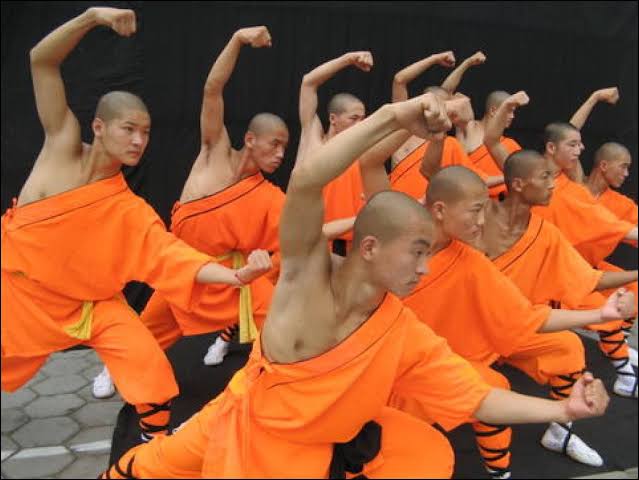
The first instance I can find of a monk in gaming culture is the class’s first appearance in original edition of Dungeons and Dragons. I guess, given the existence of religious classes such as the cleric, the monks dedication to things like prayer was dropped in favor of a more Oriental or Eastern presentation. Because of this monks had a tendency to add in some diversity and other flavor to the games. They have since reappeared in every subsequent edition of Dungeons and Dragons. This also marked the original iteration of what has now become the staple for a monk, a character that uses their own bodies as weapons, rather than relying on swords or magic.
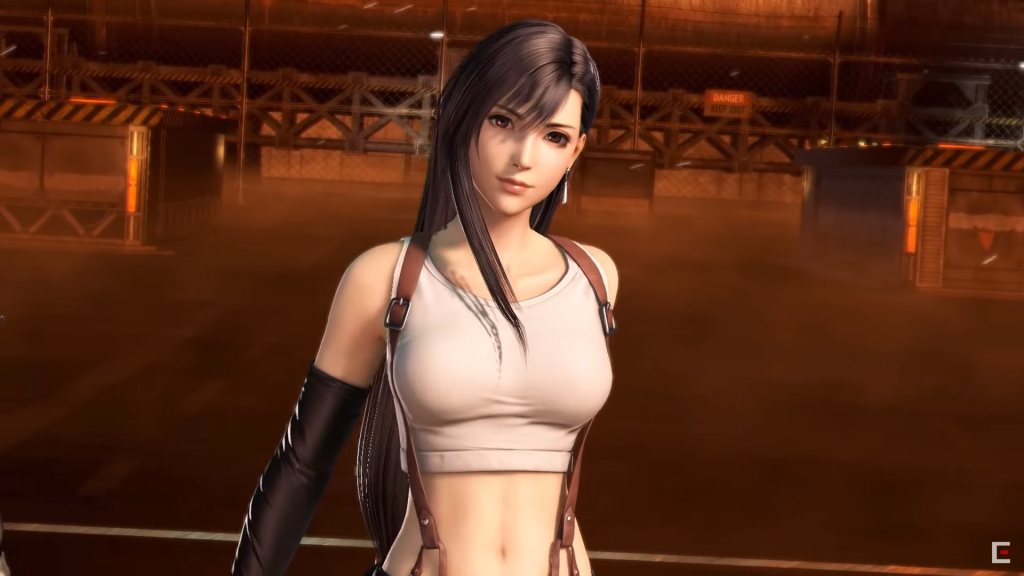
Other video games have also appropriated the use of the character. Diablo 3 is another example perhaps. However, none have used the model as extensively as Final Fantasy. The original 1987 game featured the monk as one of the core classes available to players. The class began receiving representation in subsequent titles as well, Yang Fang Leiden of Final Fantasy IV and Sabin from Final Fantasy VI come to mind. Even in games that do not feature the traditional job system have had the character present. Modern examples of a monk that does deviate from the traditional template include Tifa Lockhart (Final Fantasy VII) and Snow Villiers (Final Fantasy XIII).
Moving a bit further we can see further influences in the character Liu Kang of Mortal Kombat, a literal Shaolin Monk, the inspiration for the traditional archetype in the first place.
Now, friends, we come to another part of culture monks have found themselves. Television, specifically cartoons- or anime, for the hard otaku that will send me death threats for mixing them up. Lets look at one of the most famous, Dragon Ball Z. Let me just make one thing clear before I move on, I am not a hard core fan of anime, I don’t pretend to be one, and I dont have anything against anyone who is. Dragon Ball Z is one only a few that I have personally watched, but to be honest, it ruled, shaped, defined and splattered my childhood. Here we have an entire series based around characters that read as monks to those in the know.
A similar concept can be seen in Avatar: The Last Airbender. This show is quite possibly the most anime non-anime show that ever did anime. The main character, Aang and his entire background seems to based around the idea of a traditional monastery-living, non violent group of monks.
I feel that I have listed enough examples of this archetype in pop culture to fully illustrate my point. Monks are a popular part of culture today, but this raises the question of why.
To be perfectly honest, I think there’s really something to be said about the monks as a class. In world of steel, magic, dragons, owlbears and krakens, there is something so simplistically beautiful about a character that takes a look around at them and says, “Screw this!” And proceeds to punch things into oblivion.
Another possibility is that mystique that the monk can bring to a story. An otherworldly presence among fictional settings where near anything is possible is a difficult feat indeed. Yet the monks amazing physical strength, contemplative nature and strict adherence to their own principles can take an already exciting plot and elevate it to the next level.
Let’s not forget that despite video games, books and anime being formulated as an escape from dreary lives, each one of these media requires an element of realism to keep its story grounded. Being characters that rely on their own bodies rather than forces such as magic for their power serves as an inspirational reminder of the power of the human mind and the incredible things we can if only we put our minds to it.


 Mechatronic Burst Gaming